
Date:2025-12-22Views:0
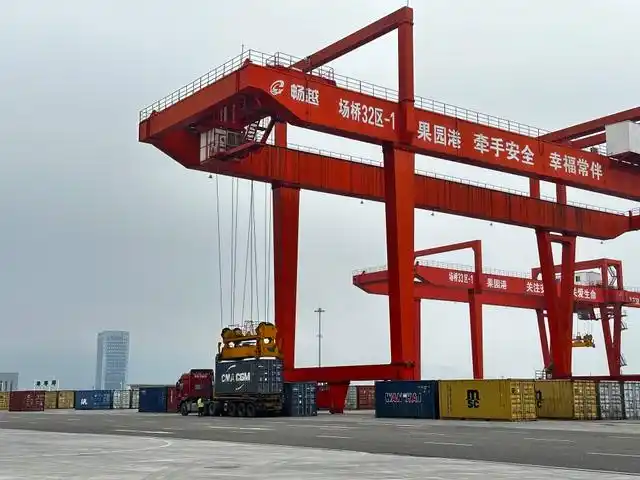
According to a report on the website of Consumer News and Business Channel on November 7th, the latest supply chain survey shows that the global transportation industry has fallen into the quagmire of freight recession this year. Entering 2024, the challenging economic situation will continue. High inventory and reduced consumer spending are the reasons for the bleak outlook.
The supply chain survey was conducted from October 21 to October 31, targeting logistics industry executives who manage manufacturing freight orders and transportation, including executives from Robinson Global Logistics, SEKO Logistics, DHL Global Forwarding, Deutsche Air Lines, OL Shipping, and ITS Logistics. These companies have a deep understanding of the orders placed by shippers with manufacturing companies around the world, as they pick up goods from ports and distribute products from warehouses to retailers.
This part of the trade channel enables investors to understand retail consumption expectations 3 to 4 months in advance based on the number of orders placed and the quantity of products transported by truck drivers from the warehouse to the store. It also enables people to understand freight rates and the volume of freight transported by trucks and railways - the two major revenue drivers for transportation industry enterprises.
Alan Bell, CEO of OL Shipping Company in the United States, who participated in and reviewed the above survey, told our channel reporters that these results indicate that the freight market in the first half of 2024 will have almost no growth, which means that prices will remain stable or even decline. He hopes that the freight volume can increase in the second half of 2024.
He said, "If the freight volume does not increase, prices will continue to be weak in 2024, possibly 2025, when transportation capacity exceeds demand
Truck transport companies are paid based on the loading capacity, and low expectations for orders may mean a decrease in revenue for this holiday season. Logistics company executives have different opinions on the LTL freight rates for the first quarter of next year. Half of them expect a 5% increase, while the other half expect the freight rates to remain unchanged or decrease - with a maximum decrease of 15%.
Most people believe that the freight rates for whole vehicle transportation will remain unchanged or decrease, while 33% expect prices to increase slightly by 5%.
Noah Hoffman, Vice President of Robinson North American Ground Transportation, said, "We expect trucking to be in a slump during the peak retail season
The decline in freight transportation has been difficult for the industry and for companies with insufficient diversification to withstand the downturn, leading to the closure of companies like Convoy, a truck transportation startup supported by Jeff Bezos. The monthly magazine Tank Transporter reported that rising fuel costs and decreasing freight rates have led to a total of 31278 truck companies either closing down or shifting their services to larger fleets.
The CEO of Uber Freight recently told our reporter that a "new key point" will emerge in the major transformation of the freight industry, where a business model with insufficient diversification cannot operate on a cost-effective basis.
Tim Robertson, a senior executive of DHL Global Forwarding, said, "No one has confidence that demand will surge during peak season or next year." He said that the survey results of this channel highlight the overall atmosphere of uncertainty in the current market. Robertson said that the fact that there are different expectations for freight rates and freight volumes, and some respondents believe that orders for product categories such as household goods will decrease, while others believe that orders will increase, "tells me that companies are making different bets on inventory strategies.
The survey found that the outlook for orders before and after the Lunar New Year (which falls on February 10th in 2024) is equally bleak, with the majority of respondents (67%) believing that orders will not increase. Due to the fact that most manufacturing factories in China will close during the Lunar New Year period, shippers have now started placing orders to deliver products before the factories close or reduce staff to avoid delays. The products usually transported during this period are spring and summer goods.
The survey shows that respondents expect a slight improvement in freight volume in the second half of 2024.
Half of the respondents expect a 5% increase; 33% of people expect a 10% increase; The most optimistic 17% of people expect an increase of 15%.
Due to the uncertainties in consumer demand, interest rates, and the global economy, most people do not have optimistic expectations for freight volume in the first half of next year, but we will definitely see a rebound in the second half of next year, "said Brian Burke, Global Chief Business Officer of SEKO Logistics